



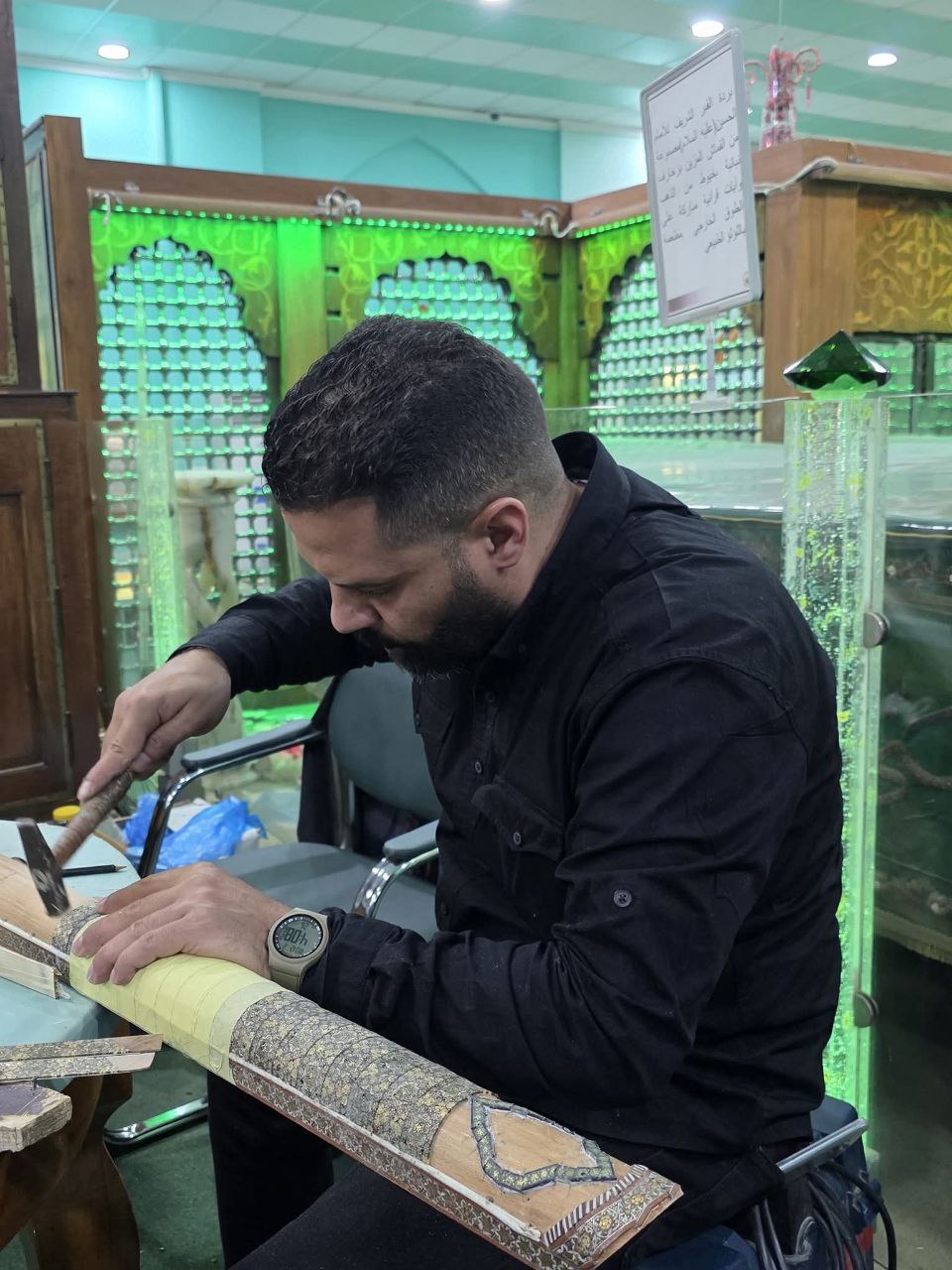
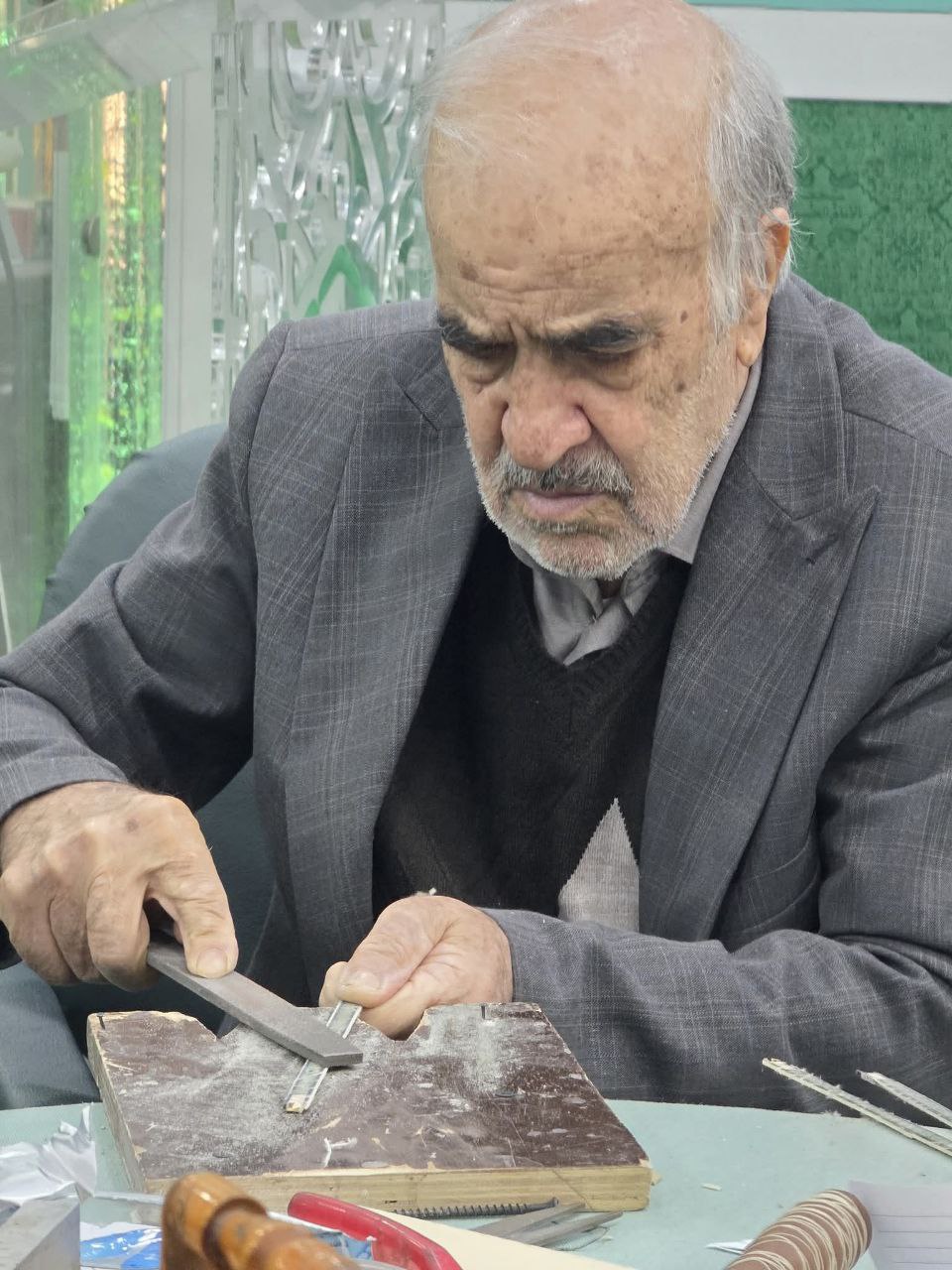
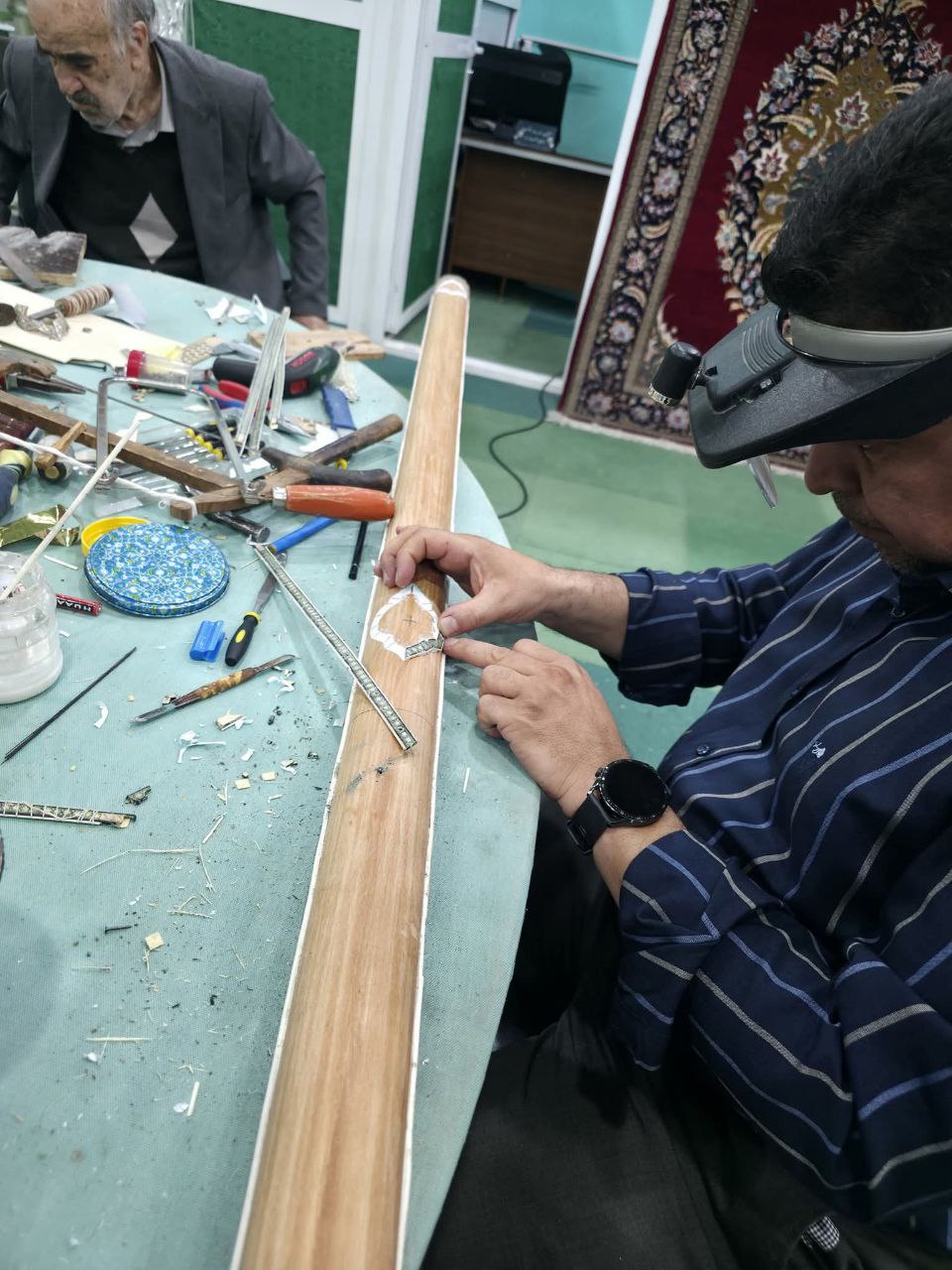
As part of the Imam Hussain Holy Shrine’s efforts to preserve historical and religious heritage, the Maintenance Unit of the Imam Hussain Museum Department has undertaken conservation and restoration work on a historic pulpit dating back to the Qajar era. The project aims to protect the artifact from deterioration and preserve its artistic and historical value, ensuring it remains a living testament to an important period in the history of Islamic art and religious heritage.
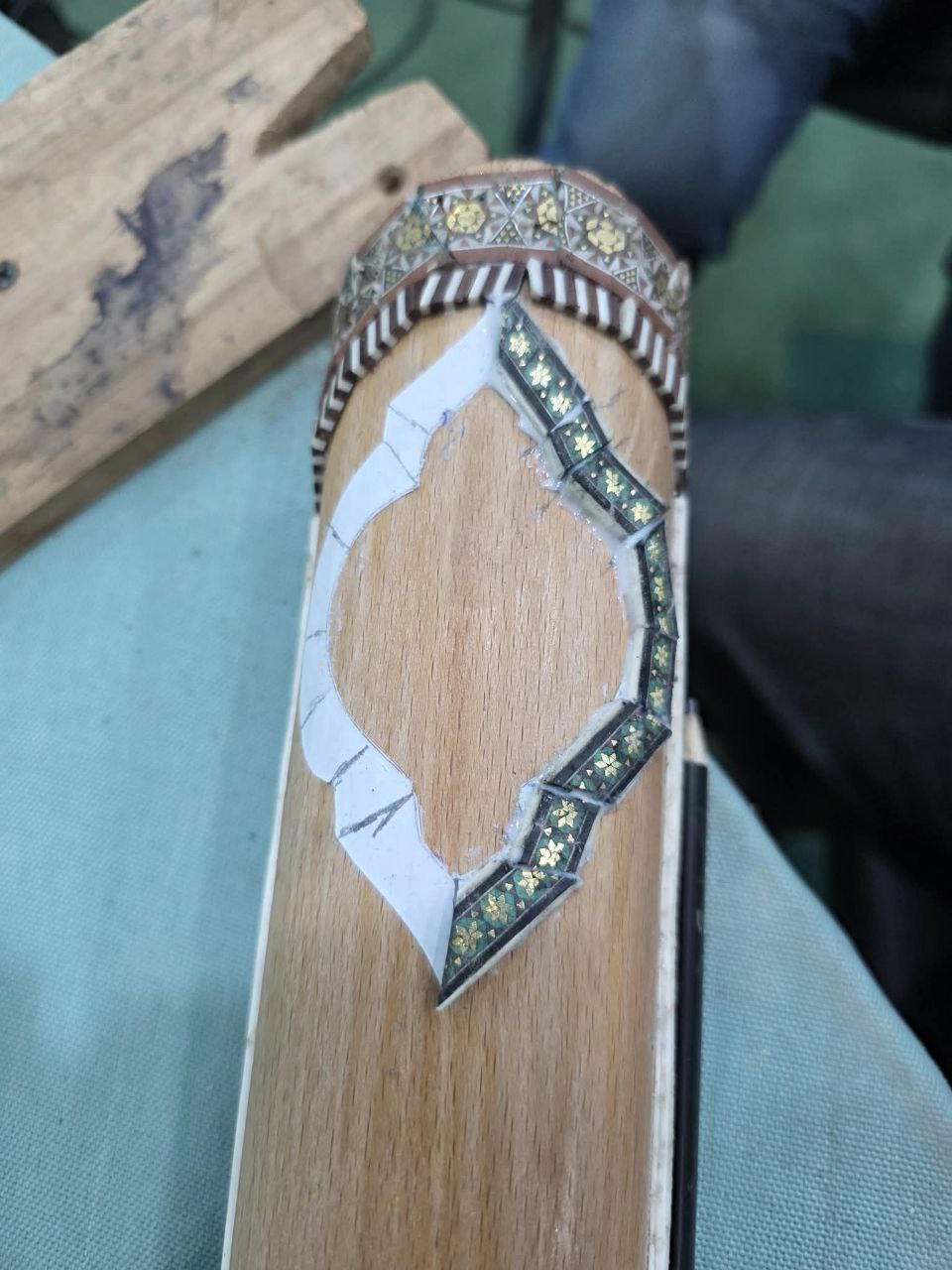
Aseel, an official at the Imam Hussain Museum’s Protocols Section, said that “the period to which the pulpit dates ranges from 1785 to 1925. The materials used in its restoration are primarily wood, and it is covered using the ‘Khatam Sharif’ technique, a highly refined and exquisite craft that can be described as royal in nature. Today, only a limited number of specialists still practice this art, which involves the use of natural ivory, elephant ivory, copper, silver threads, and natural mother-of-pearl for inlay, after the pulpit itself is constructed from wood.”
He added that “the pulpit is decorated using the Khatam technique, which is the same method employed in the wooden inlays above the shrine of Imam Hussain (peace be upon him) and other holy shrines. This is why it is known as Khatam art. Ustad Sami Saffar Kahraman is among the very few craftsmen worldwide who still use this technique. The maintenance staff of the Imam Hussain Holy Shrine Museum organized this as their third training course to learn and preserve this art, ensuring it does not disappear and to safeguard the heritage of Ahl al-Bayt (peace be upon them) and the museum’s collections.”
He explained that “this pulpit was found in the storage facilities of the Imam Hussain Holy Shrine when the warehouses were opened around 2009 during the initial stages of establishing the museum. It was constructed using an assembly method, meaning no nails were used in its manufacture.”
He further noted that “the pulpit was previously located within the Imam Hussain shrine, and many Hussaini preachers ascended it during that period, including well-known figures such as Sheikh Abdul Zahra Al-Kaabi and Sheikh Hadi Al-Karbalai, among others. The pulpit has been on display since the museum’s opening in 2011 and remains exhibited to this day. The purpose of the restoration is to preserve this pulpit, as it is considered a very rare piece housed within the Imam Hussain Holy Shrine Museum.”
Attachments



اترك تعليق