


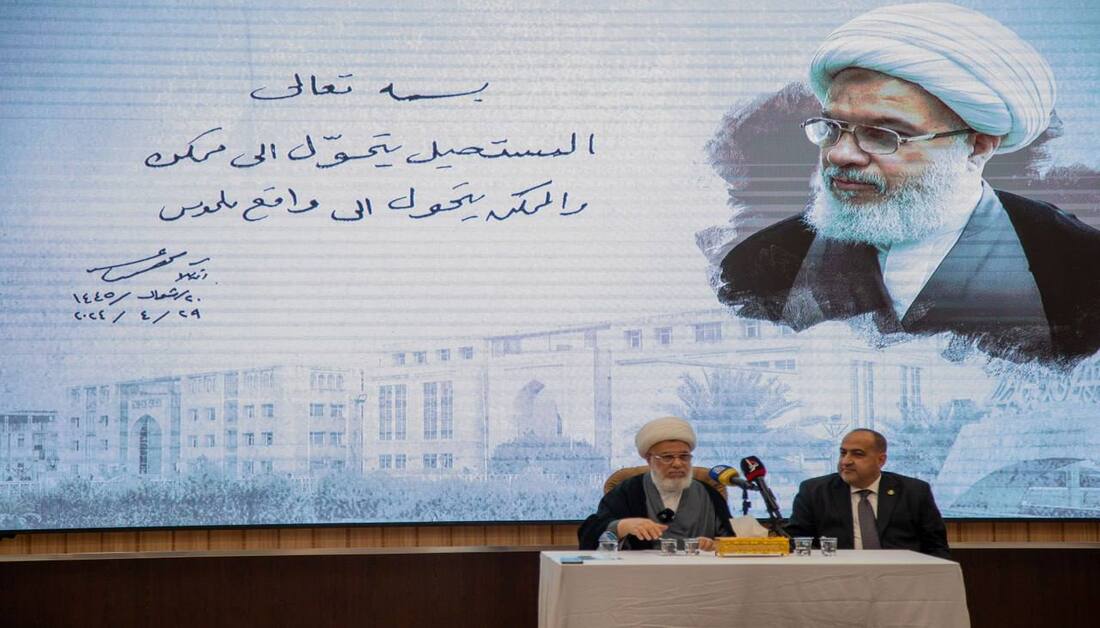
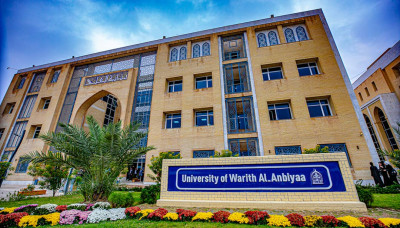
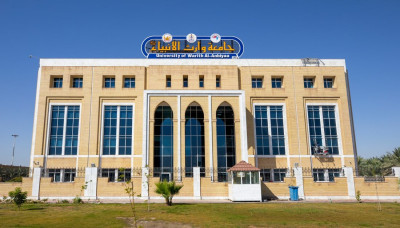
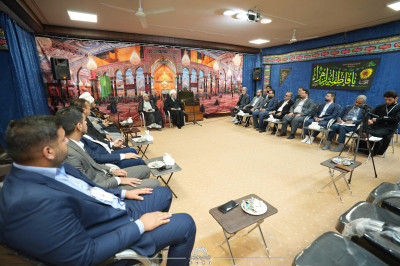
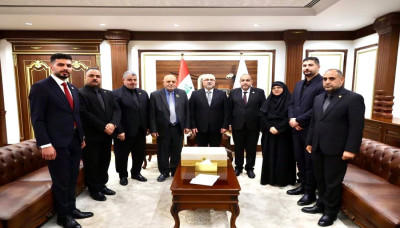
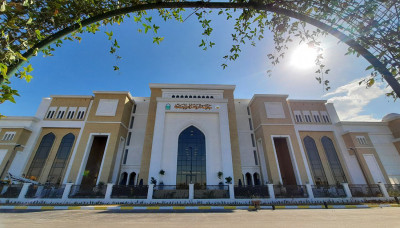
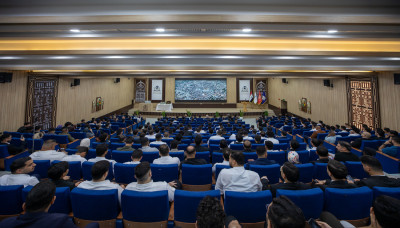
The Representative of the Supreme Religious Authority, Sheikh Abdul Mahdi Al-Karbalaei, affirmed that graduation day is not merely a moment of celebration, but a transition from the arenas of study to the arenas of responsibility, and from aspiration to accountable reality. He made these remarks during a visit to Warith Al-Anbiyaa University, where he met with final-year students at the College of Medicine.
The Representative of the Supreme Religious Authority stated, “There is a common perception of graduation day as the end of long years of diligence, effort, and late nights, and the beginning of joy in reaping the rewards of success. However, our vision of this day is deeper and broader. We see it as a declaration of the student’s readiness to bear the great trust of safeguarding people’s lives and health, and that graduation day is not merely a moment of happiness, but a transition from the arenas of study to the arenas of responsibility, and from dreams to responsible reality.”
He explained that “graduation is not a certificate to be hung on the wall, but a covenant entrusted by Almighty God and society to the doctor. A mistake after graduation differs from a mistake during the study phase, as it may directly impact a person’s life and health.”
He added that “the study phase represented a shared responsibility between the student, their family, their professors, and educational institutions. After graduation, however, the greater portion of responsibility shifts to the graduate, who becomes directly accountable for people’s lives, health, and their ability to continue performing their roles in life.”
He emphasized that “the doctor is a messenger of mercy to humanity, not merely a machine for diagnosis and treatment, but a soul interacting with another soul, a human spirit dealing with a spirit burdened by pain and suffering. This requires attentive listening, reassurance, and humane engagement.”
He continued, “Every patient is a trust in the hands of the doctor, a trust from Almighty God, from their family, and from their society, requiring the highest levels of vigilance, precision, and ethical discipline.” He pointed out that “the message of the Imam Hussain Holy Shrine in establishing medical colleges and other faculties is not one of investment or commerce, but an investment in human potential. Funds are directed toward developing and expanding the university and providing scientific and practical resources to serve students and society, with the aim of preparing a mission-driven, humane doctor who is aware of their life’s purpose.”
He called for “strengthening communication skills and teamwork, and avoiding the belief that success can be achieved individually, as the highest level of success is attained through a unified team spirit, cooperation, and harmony.”
He also noted that “we take pride in the first cohort of students at the College of Medicine, as they represent the initial fruits of significant efforts by the university and the college’s deanship. They are the first ambassadors of this important college, and ambassadors of mercy and life for the people.”

اترك تعليق