


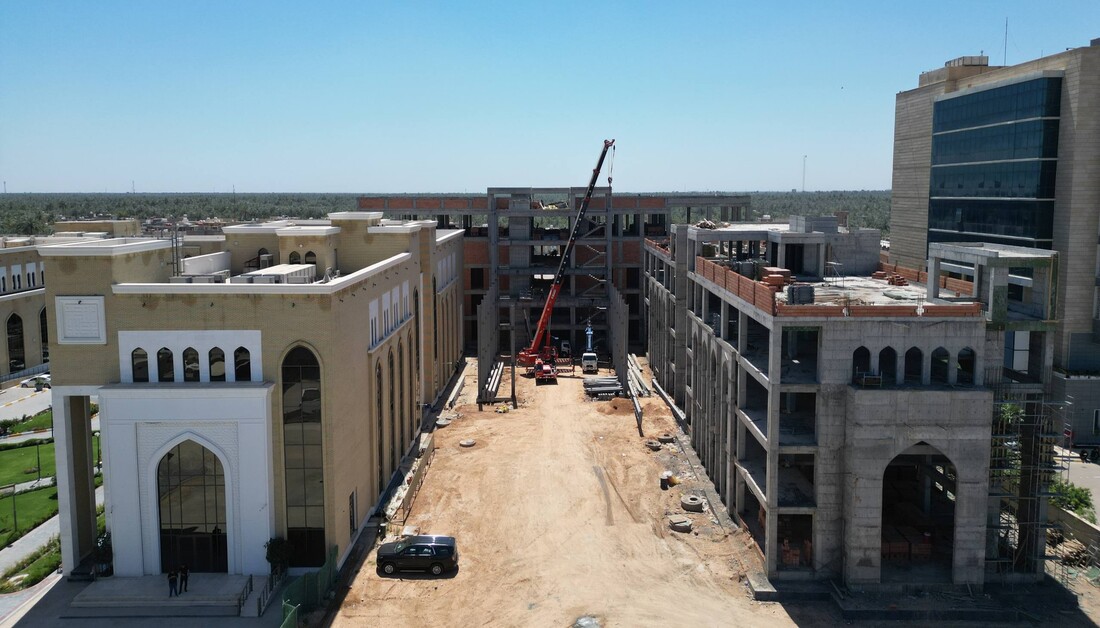
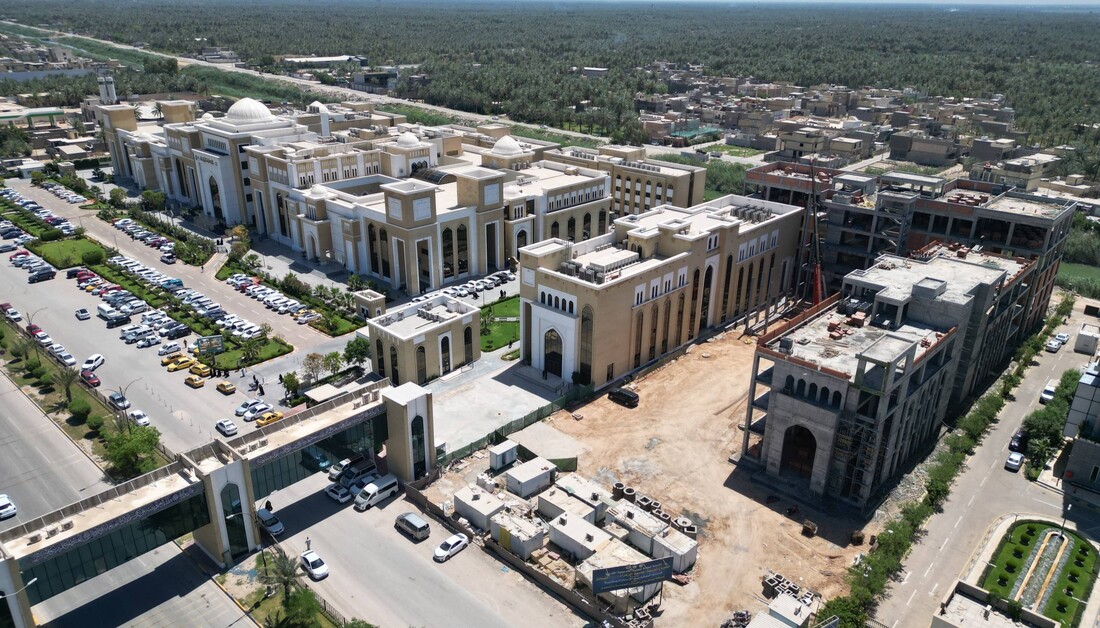
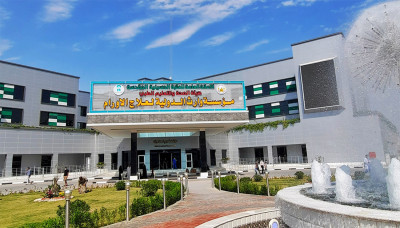
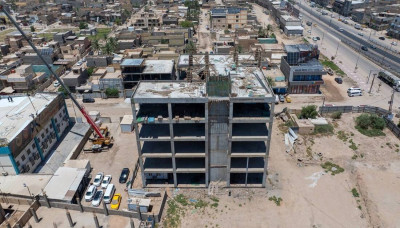
The Strategic Projects Department at Imam Hussain Holy Shrine announced the continuation of work on the second phase of the expansion project for Al-Zahraa University for Women, affiliated with the Imam Hussain Holy Shrine, confirming the achievement of advanced completion rates within the ongoing project works.
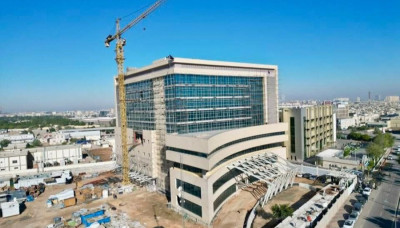
The head of the department, engineer Mohammed Diaa Mohammed, said in a statement to the official website that “the engineering and technical staff of the Strategic Projects Department affiliated with the Imam Hussain Holy Shrine continue their work at an increasing pace on the second phase of the future expansion project for Al-Zahraa University for Women in Karbala Governorate,” noting that “the project is achieving advanced completion rates within the works currently being carried out.”
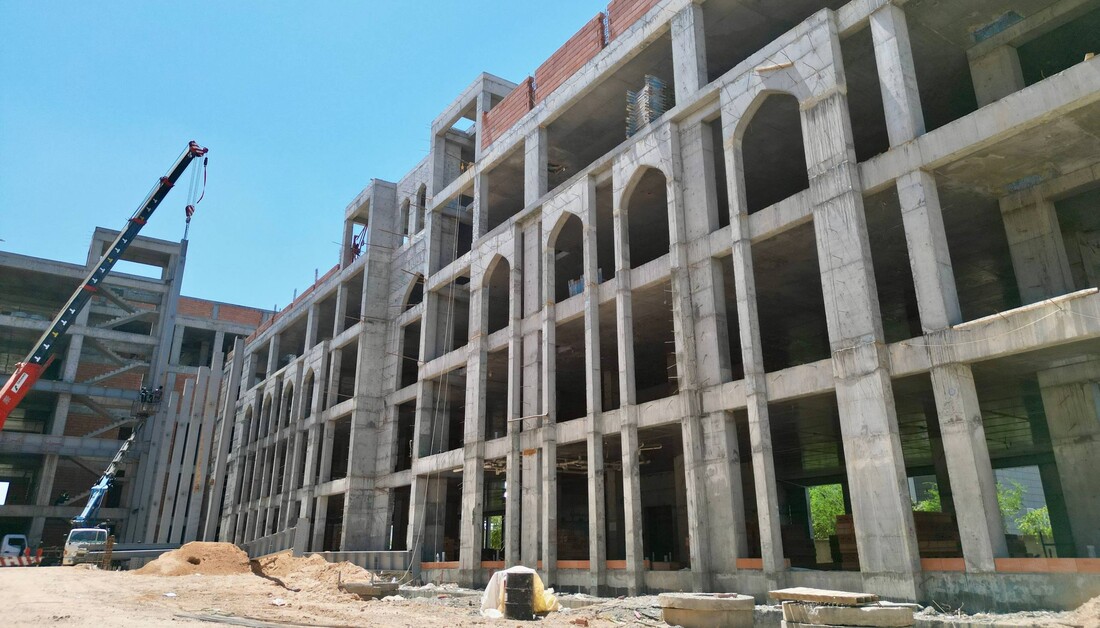
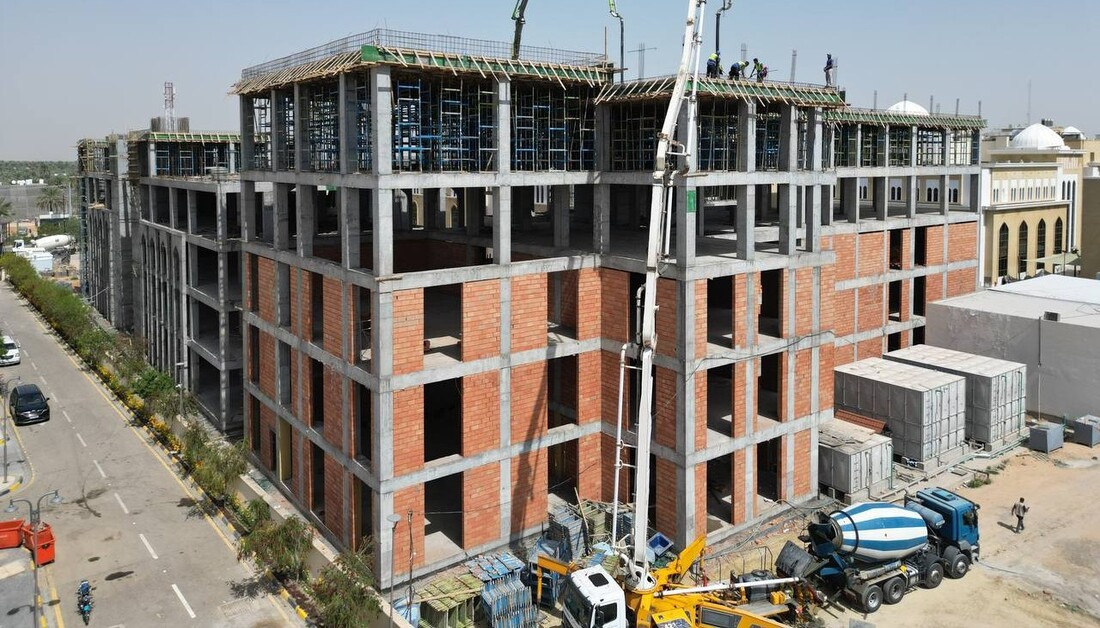
He explained that “the project consists of (2) buildings. The first is the central building, which includes (5) floors and was constructed on land measuring (1660) square meters, while the total built-up area reaches approximately (8300) square meters. The building is also equipped with (5) elevators, in addition to classrooms, medical laboratories, and administrative and service rooms.”
He added that “the side building consists of (4.5) floors and was built on land measuring approximately (1170) square meters, while its total built-up area reaches nearly (5000) square meters. It is equipped with (2) elevators, in addition to classrooms, laboratories, and administrative and service rooms.”
He stressed that “work within the project continues at a high pace, and the department’s staff have succeeded in achieving advanced completion rates across various stages of the project.”
It is worth noting that the Imam Hussain Holy Shrine, through the implementation of the directives of the representative of the Supreme Religious Authority and its legal custodian, Sheikh Abdul Mahdi Al-Karbalaei, is carrying out numerous important projects across various vital sectors, particularly in the field of educational infrastructure, to provide an integrated academic environment that contributes to supporting the educational and scientific process.
Attachments




اترك تعليق