


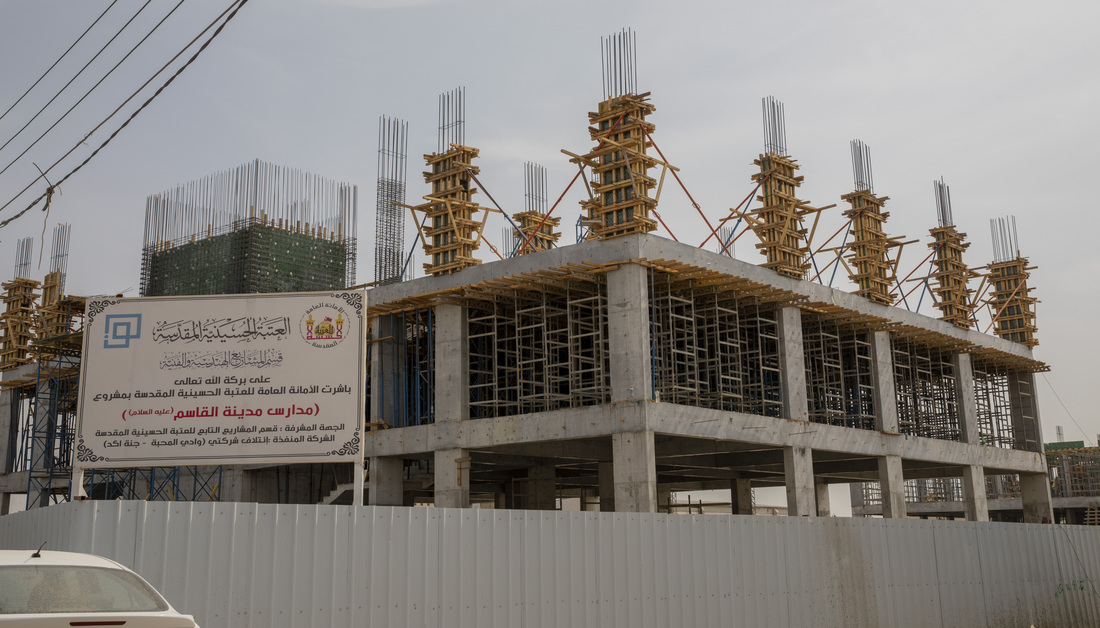
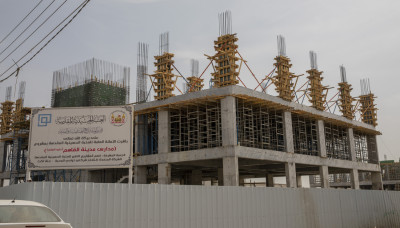
The Engineering and Technical Projects Department at the Imam Hussain Holy Shrine is continuing construction work on a school complex project in Al-Qasim District, Babil Governorate, as part of its ongoing efforts to support the educational sector, enhance educational infrastructure, and provide an integrated learning environment that fulfills students' needs.
The project manager, Engineer Hussein Alaa Al-Saadi, stated in an interview with the Official Website that "the project is being executed at the expense of the Imam Hussain Holy Shrine, under the sponsorship of the representative of the Supreme Religious Authority, Sheikh Abdul-Mahdi Al-Karbalai, with the goal of providing an integrated educational environment combining pedagogical, service, and humanitarian aspects."
He explained that "the total area of the project reaches (5,791) m² and includes two school buildings, as well as a number of service structures and facilities, including an administration building covering (250) m² consisting of two floors and housing a public library, alongside a building dedicated to a kindergarten of the same area, which also consists of two floors."
He added that "the project features a multipurpose hall spanning (500) m² with a height reaching (14) meters, in addition to equipping the buildings with a comprehensive system of modern services and facilities, contributing to the provision of a suitable educational environment for students and teaching staff."
He further noted that "the educational buildings will comprise prepared classrooms, digital learning technologies, computers, communication systems, and elevators, along with a cafeteria, seating spaces, administrative facilities, and break rooms for educational staff."
The Imam Hussain Holy Shrine continues to execute its educational and service projects across several governorates, aiming to support the learning process, upgrade the school environment, and offer improved educational opportunities for orphans and students, thereby reinforcing its role in caring for these demographics and bolstering educational and humanitarian standards.

اترك تعليق