

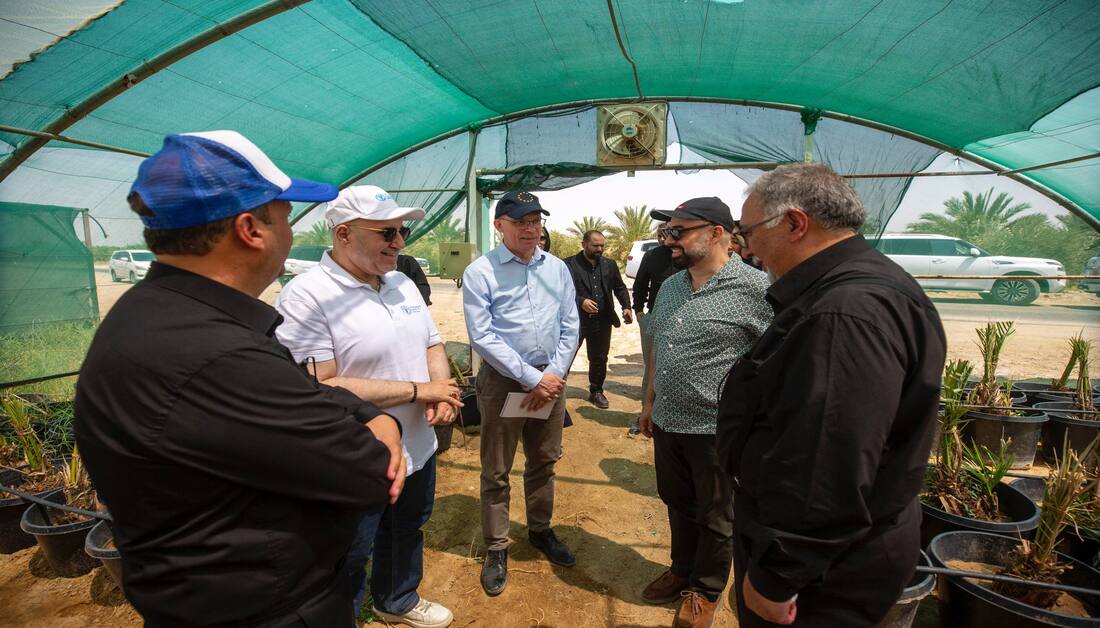
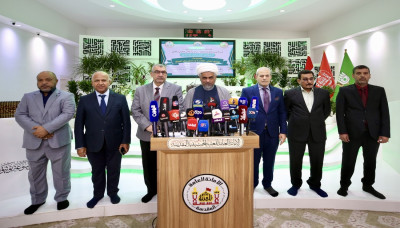
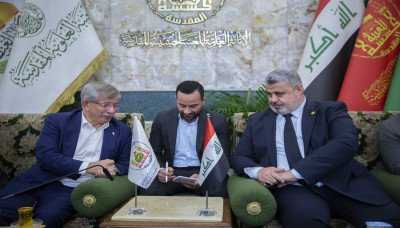
Fadak Date Palm Farm, affiliated with the Imam Hussain Holy Shrine, received a delegation from the European Union in coordination with the Food and Agriculture Organization of the United Nations (FAO). The visit aimed to explore the agricultural and scientific practices implemented by the shrine, as well as discuss ways to enhance cooperation and support agricultural projects in Iraq.
Board Member of the Holy Shrine and Head of the Agricultural Authority, Mr. Razzaq Al-Taie, stated in an interview with the official site that Fadak Date Palm Farm welcomed a delegation from the European Union, coordinated through the UN Food and Agriculture Organization (FAO), to review the shrine's agricultural and scientific experiences and discuss avenues for strengthening cooperation and supporting agricultural projects in Iraq.
Al-Taie explained that "the delegation's visit aimed to observe the real and scientific practices executed by the General Secretariat of the Imam Hussain Holy Shrine in the agricultural field, including Fadak Farm. The tour included learning about the farm's nature, total area, and operational mechanisms, as well as its water sources, production quality, date varieties, and the number of workers."
He added that "the delegation conducted a field inspection to review the main challenges facing the farm, foremost among them water scarcity and the harsh climatic conditions Iraq is experiencing. They were also briefed on the management methods applied to preserve agricultural yields and improve their quality."
He continued, stating that the Food and Agriculture Organization aims to support agricultural projects of significant importance in increasing production and boosting quality, as well as playing a role in combating desertification and enhancing food security.
Al-Taie noted that "the delegation expressed a positive impression regarding the experiences and capabilities observed at Fadak Farm. They praised the efforts of the farm's management and the attention given by the General Secretariat of the Imam Hussain Holy Shrine to agricultural projects, particularly those contributing to the development of agricultural production amidst climate and water challenges."
He indicated that "both sides discussed several files relating to date marketing and processing, in addition to the importance of studying the experiences of countries with climatic and water conditions similar to Iraq's to benefit from modern expertise and technologies in advancing the agricultural sector."
He highlighted that "Iraq faces major challenges in the field of water and resource scarcity, necessitating stronger cooperation with specialized international institutions and organizations to support agricultural projects and modernize production methods. This will contribute to mitigating the effects of desertification and providing vital food products, chief among them dates."
The visit of the European delegation and the FAO to Fadak Farm falls within an exploratory tour to assess the nature of agricultural projects implemented by the Imam Hussain Holy Shrine, while exploring opportunities for partnership, cooperation, and leveraging international expertise to address agricultural and environmental challenges.


اترك تعليق